

Every industry learns too late that outsourcing experience means outsourcing value.
While I’ve always believed in looking sideways to other industries for inspiration, learning from their challenges is just as valuable.
I was reading a brilliant piece in The Atlantic by Ellen Cushing, about how food delivery has quietly hollowed out the restaurant industry — and it made me think of retail.
Restaurants aren’t struggling because the food got worse. They’re struggling because the experience got outsourced. What started as a “modern convenience” became an industry-wide dependency. Tech platforms promised reach, scale, and survival, and in return, quietly took the very thing that made restaurants special: control of the customer experience.
Now, many restaurants are ghost kitchens — hot food factories built for delivery, not delight. The food arrives. The soul doesn’t.
Sound familiar? Retail is walking the same road.
When everything becomes deliverable, when stores are reduced to pickup counters or fulfilment hubs, we risk stripping away the serendipity, the theatre, the human touch that make brands feel alive.
Delivery didn’t make dining easier. It made it emptier. Retail risks the same fate: convenience without connection, access without affection.
Restaurants once served communities. Stores do too. Both are neighbourhood infrastructure, not logistics nodes. Because when you remove the spaces where people gather, taste, talk, and trust, you don’t just lose sales. You lose meaning.
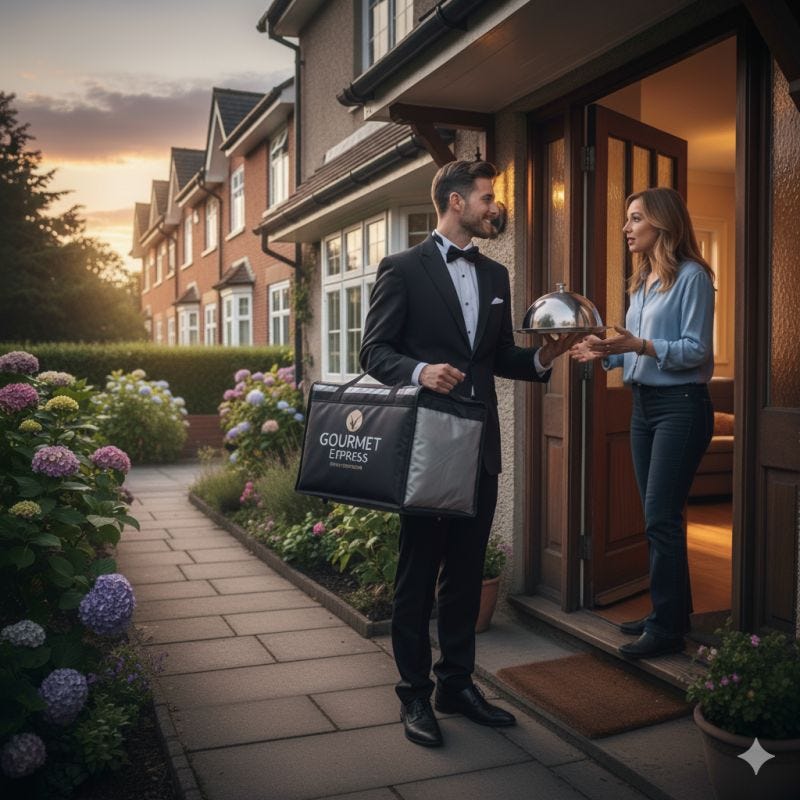
But here’s the twist — there’s also opportunity. If restaurants can learn to meet customers wherever they are, they could elevate delivery and reclaim the experience. Imagine your meal arriving with a white cloth, table setting, and a few words of service — then collected later. A kind of neighbourhood ‘room service’ that creates jobs, deepens connection and restores hospitality.
Perhaps this is the path retail should explore too: designing experiences that reach into homes rather than just waiting for people to show up. Not by replacing the store — but by extending its spirit.
If food delivery taught us anything, it’s this: Just because you can deliver an experience, doesn’t mean you should stop creating one.
You can find a link to Atlantic’s article:
The Innovation That’s Killing Restaurant Culture HERE
Curious about how Quinine helps organisations turn retail strategy into physical experiences?