

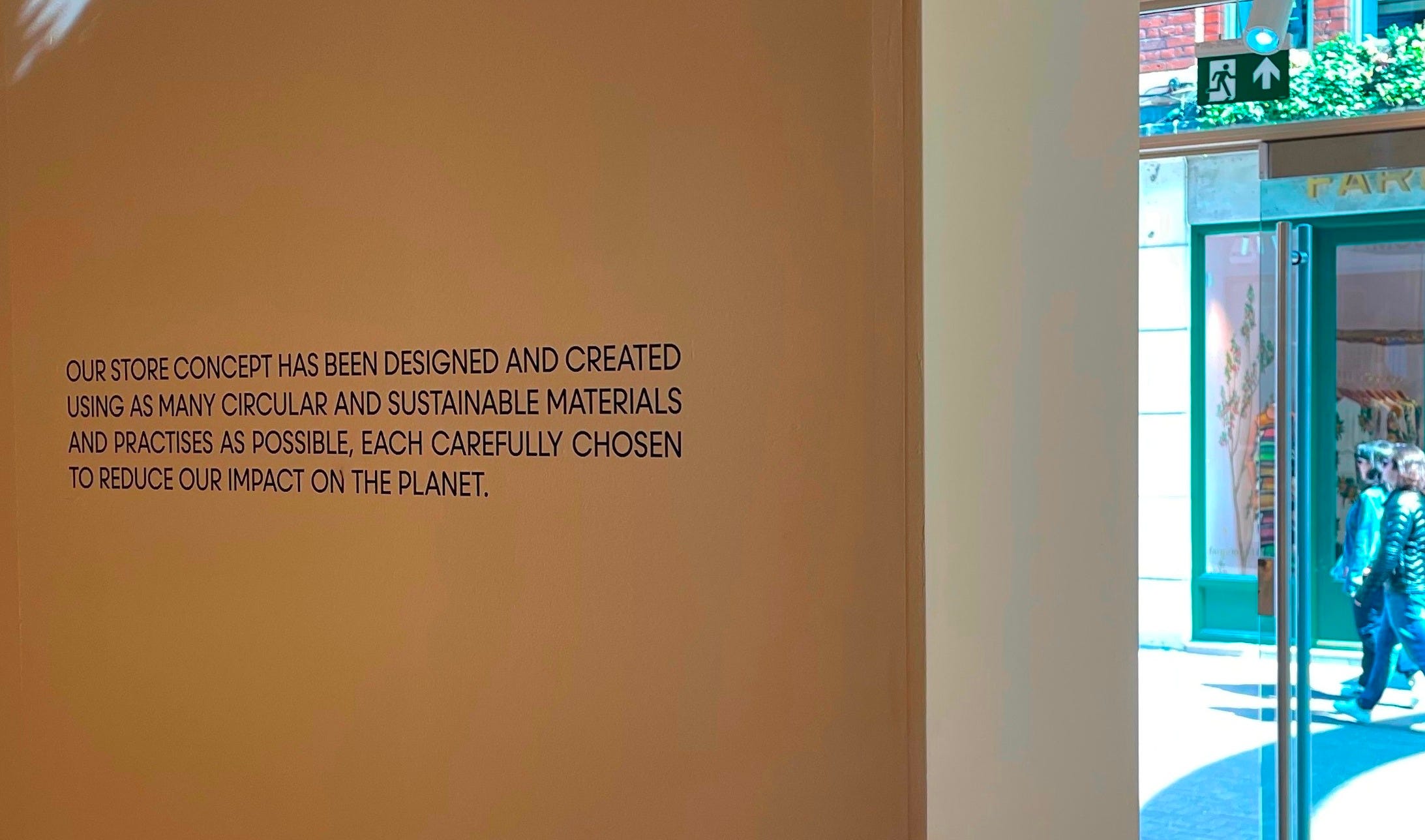
The most overlooked piece of retail magic isn’t the floor plan or the lighting. It’s the humble little sign that explains what you’re looking at. Let’s be honest: much of store design is a private conversation between designers. They obsess over textures, materials, and mood. Shoppers? They’re just trying to find their size and get on with their day.
That’s why you need a sign — a side door into the story behind the store.
A small investment, a few well-chosen words - suddenly the store transforms. You’re no longer just selling products; you’re inviting people into your world. That oak table isn’t just furniture, it’s reclaimed timber from a 19th-century railway station. That textured wall? Volcanic ash from Mount Etna, chosen to reflect the brand’s restless spirit. Who knew? Without context, it’s invisible.
When people understand why something exists, they value it more. They stay longer. Engage deeper. In a world of stores screaming discounts, the smartest brands whisper something interesting with quiet confidence.
Think about it: galleries don’t just hang paintings and hope you ‘get it.’ They offer a note, a clue, a story. The best stores do the same. Enough to intrigue, never enough to bore.
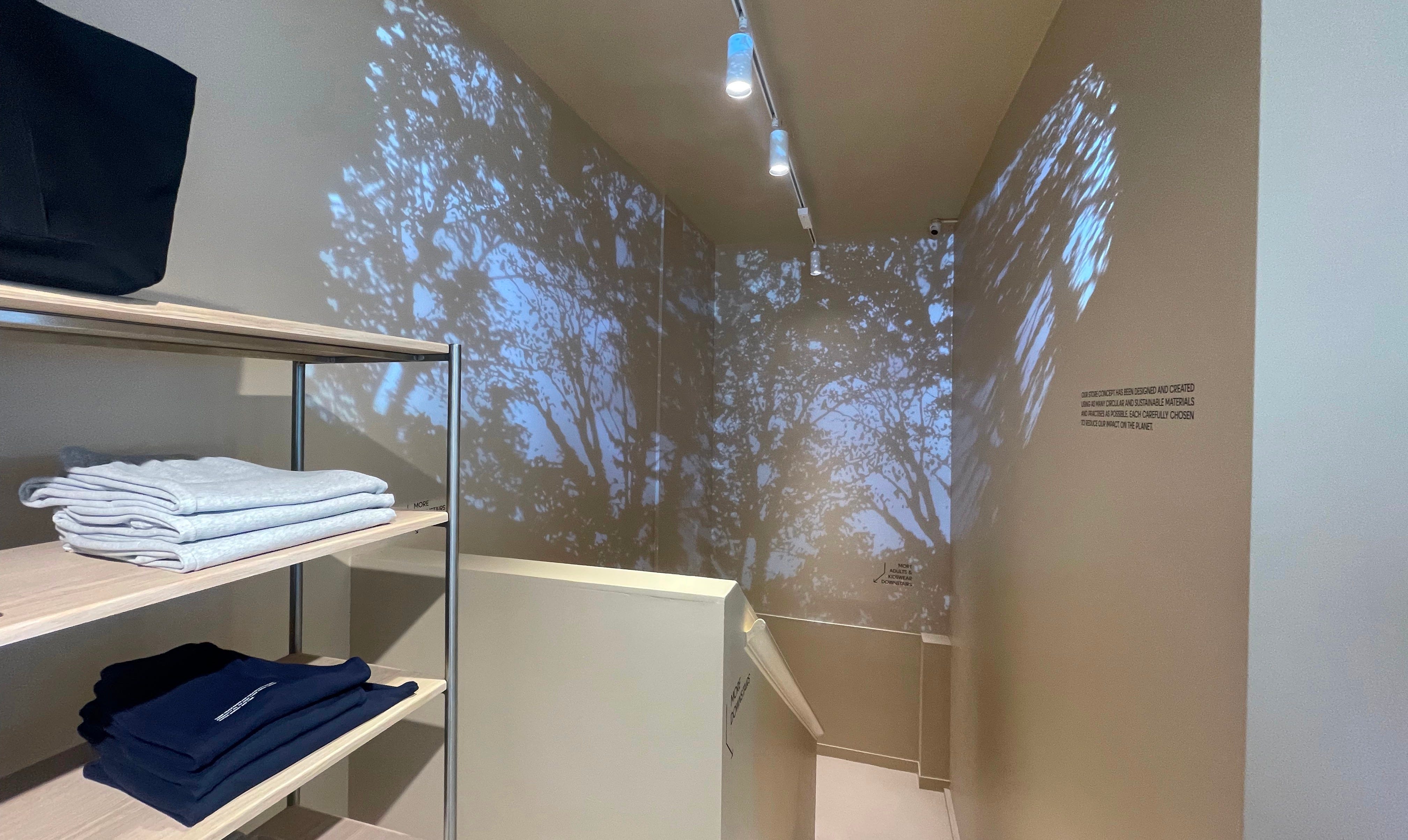
PANGAIA‘s Carnaby St. store gets it right. No jargon, no slogans — just a few thoughtful words stencilled on the wall. It opens up the store concept — for the curious. A soft nudge toward deeper engagement. The real magic? Staff pick up where the signage leaves off. Signs start the story; staff bring it to life.
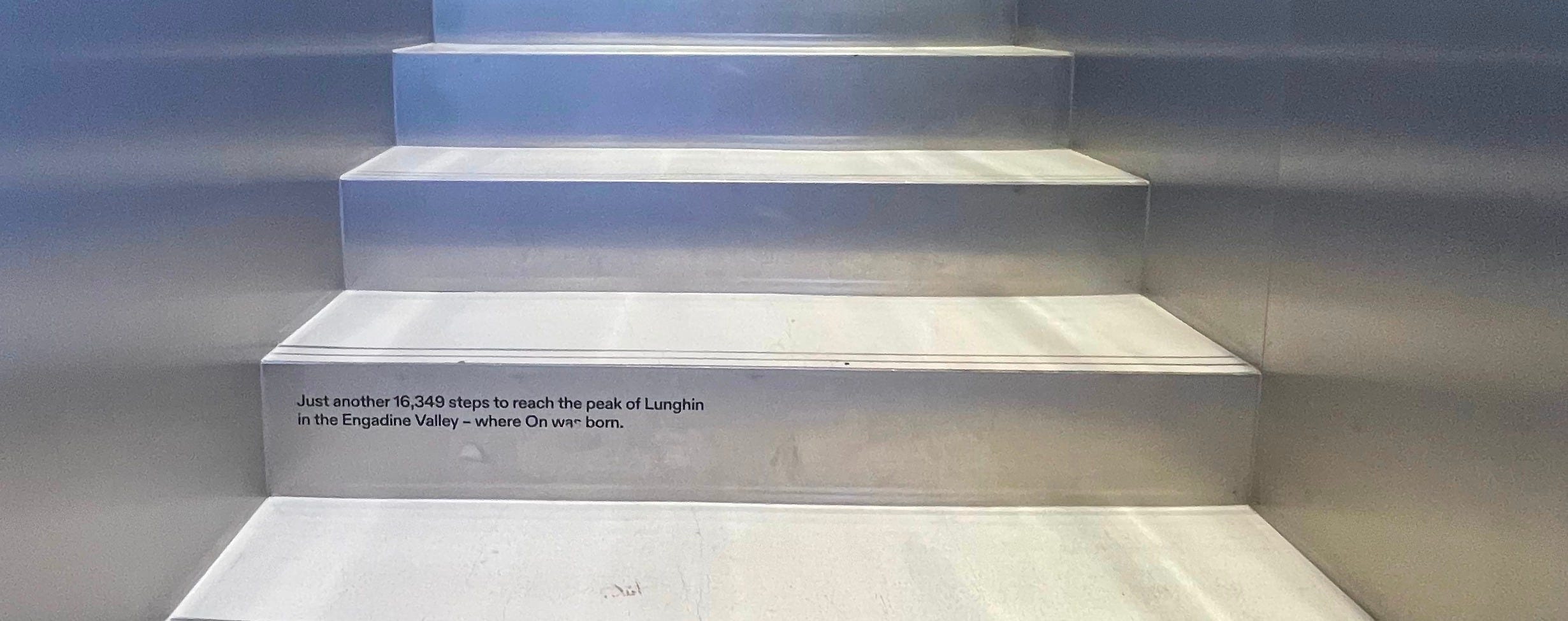
On‘s Regent St. staircase does it too — turning a dead space into a talking point.
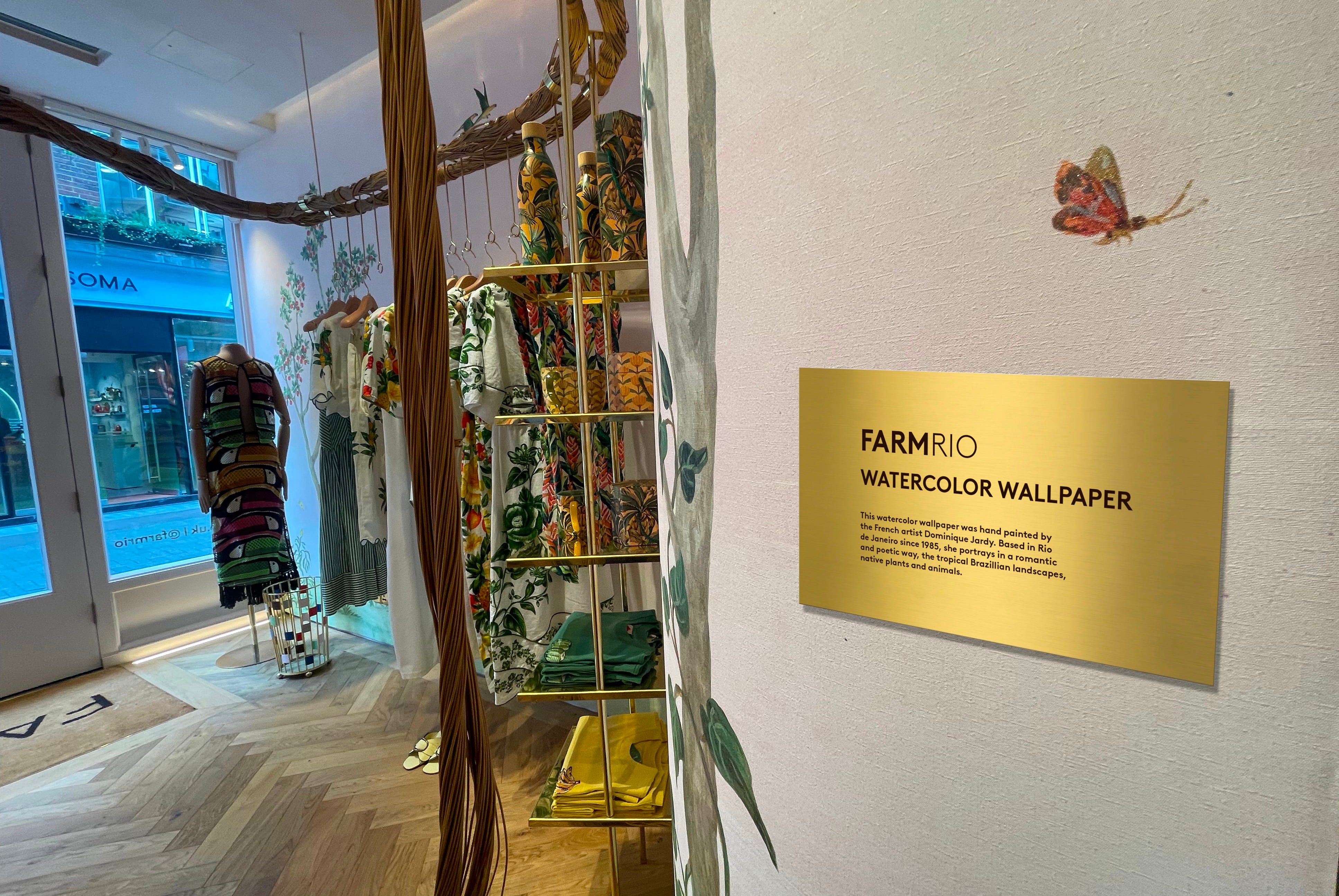
FARM Rio's wall plaque? More gallery than gimmick, elevating wallpaper into storytelling.
That’s the opportunity. Design is only half the conversation. The rest is helping people understand it — especially first-timers. Because unexplained design risks becoming just decoration. And in a world hungry for meaning, that’s a missed opportunity.
You might argue, ‘good design speaks for itself’ true… to a point. But design speaks a language many don’t understand. It hides meaning in rituals and artefacts, many miss. That’s why we guide. We prompt. We open the conversation.
Because when people understand your choices, they understand your values. And when they understand why, they trust you more - and trust builds loyalty.
Physical space is a competitive advantage most brands underuse. It engages the senses, sparks emotional connections, driving brand love and results— from longer dwell times to higher conversion.
A simple sign, done well. costs little but delivers disproportionate impact. The smallest touchpoint, with the biggest return.