

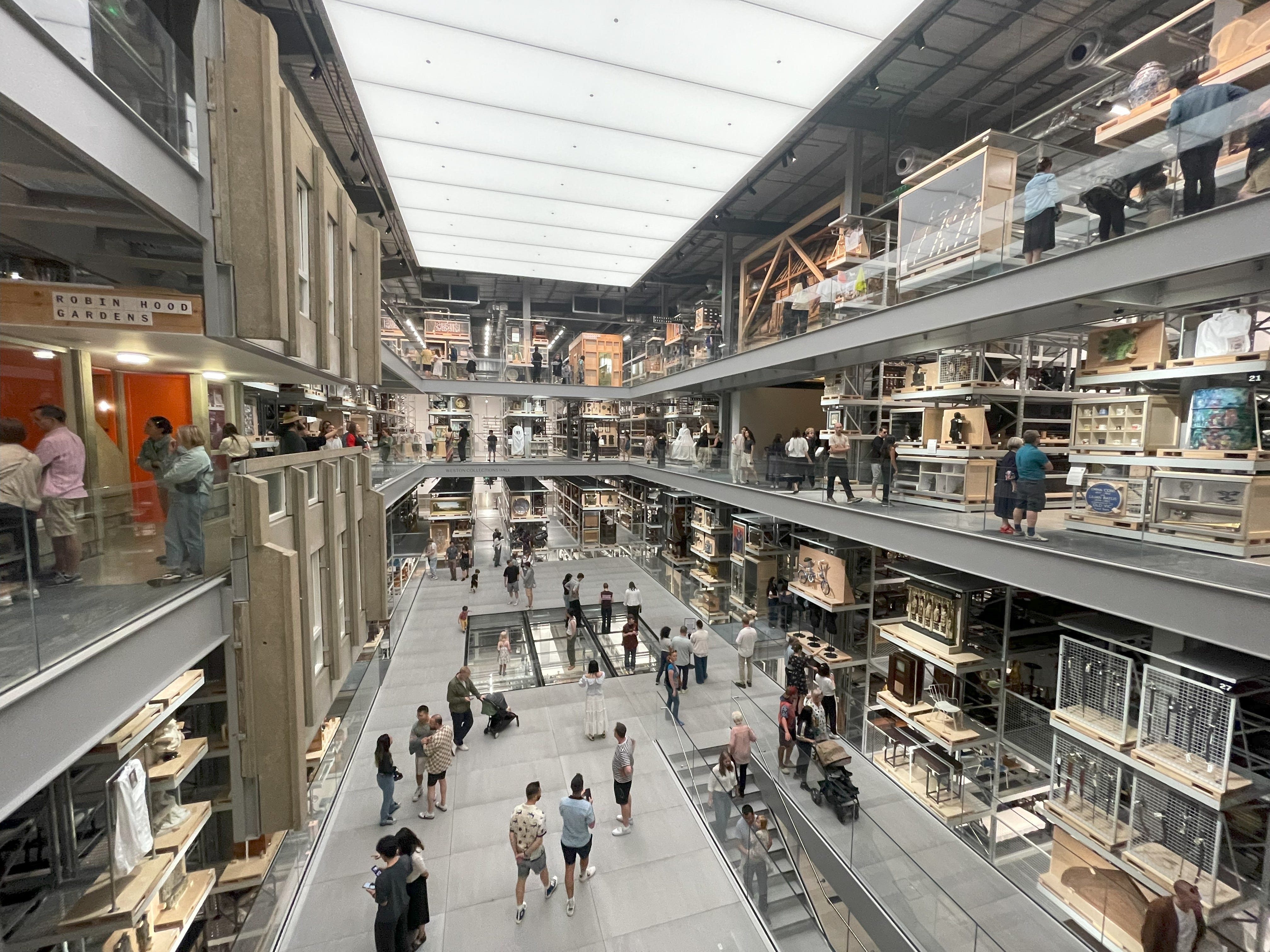
The Victoria and Albert Museum‘s Storehouse isn’t just a building. It’s a time machine. A warehouse of wonder. Tucked inside London’s Olympic media centre, it’s a secret worth discovering — part archive, part classroom, part temple. A beautiful contradiction, which I enjoyed visiting with my family.
And it’s not just the objects that make it special, it’s the design of the space. The details underfoot, the handrails you touch, a layout that invites you to meander, not rush. Objects aren’t perched on pristine plinths but sit proudly on wooden pallets, albeit elegant ones. It’s a space that whispers, not shouts, adding to the feeling of discovery. Like walking through a treasure trove, where every artefact is less about display, more about memory. Stories not yet told. Rituals waiting to be remembered. The joy is in what you stumble across.
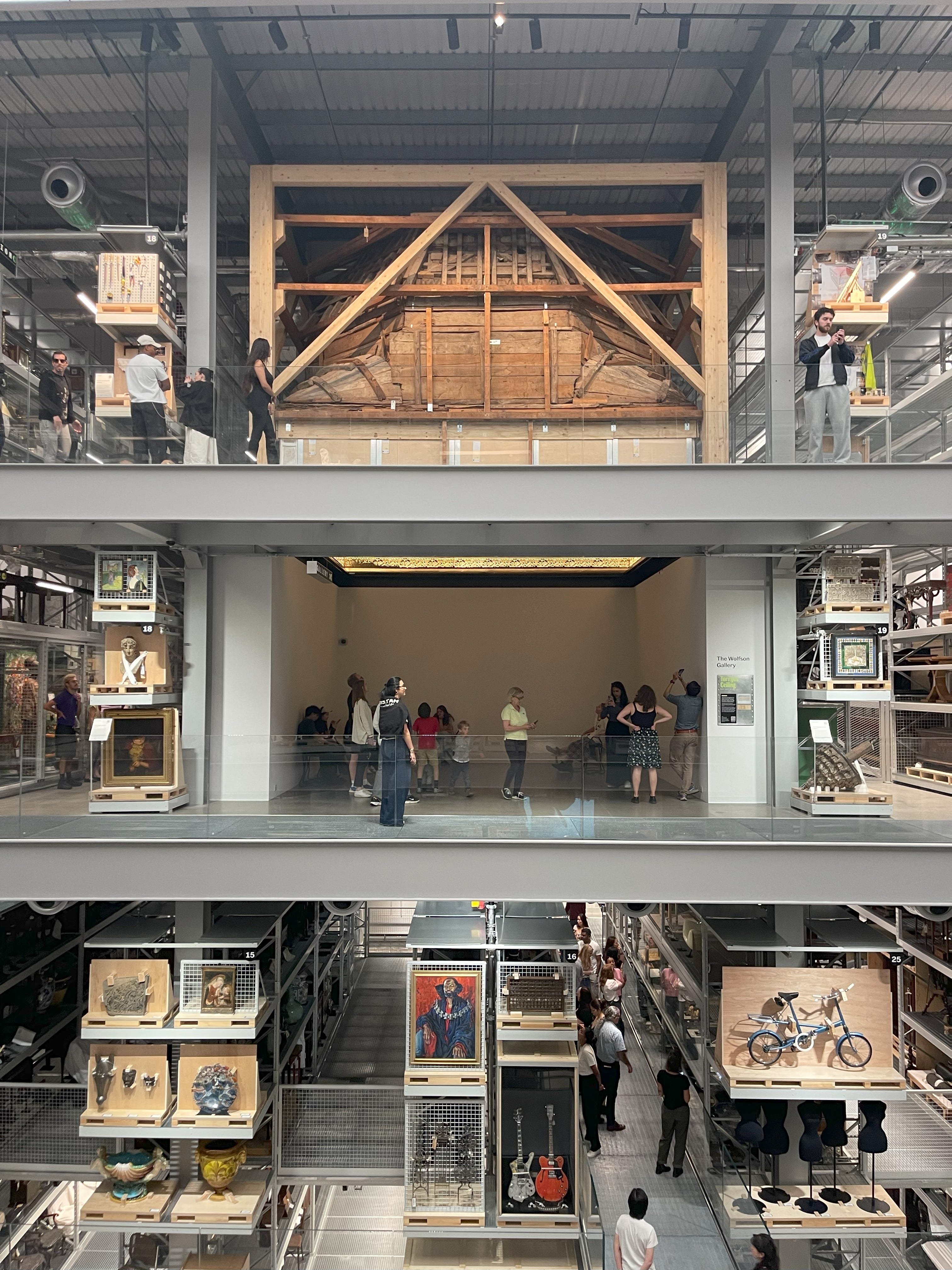
Having studied at the RCA, I’ve always felt a personal thread connecting me to the V&A. As a student, it provided raw material for drawing classes, artefacts that sparked ideas. I’d walk the galleries looking for references, but often found something rarer: a kind of stillness that made the objects feel less like exhibits, more like old friends. It’s more than a museum. More than a collection.
Because here’s the thing — we don’t just use objects. We build relationships with them. We attach meaning. We create rituals. A favourite mug. A worn coat. A stack of records you’d never play on shuffle. These aren’t just things. They’re parts of us.


But somewhere along the way — in our rush to make everything frictionless and optimised — we’ve stripped the soul out of the story. Shopping became scrolling. Ownership became overnight delivery. And just like that, the bond began to fray.
The ritual disappeared. And with it, the connection.
That’s why I’m fascinated by how ‘People, Place, and Things’ intertwine. How the simple act of choosing, holding, and owning — in the right space, with the right story — can build something deeper. Something that lasts.
Stories echo throughout every corridor of the Storehouse. Every object feels like a conversation waiting to happen. It’s not just a place to visit. It’s a place to feel.
And maybe that’s what retail needs to rediscover. Not just faster transactions or smoother checkouts — but spaces that make people feel something. Spaces that invite curiosity, spark conversation, and deepen brand connections.
Because when customers feel connected, they stay longer. return more often and buy with more conviction.
In the battle for loyalty, it’s not convenience that wins — it’s meaning. And the most successful brands of the future won’t just sell products… they’ll curate places people want to be. Not faster. Not cheaper. But richer. More human. More connected.